
The Scent of Antiquity: An Introduction to Agarwood’s Mystical Heritage
The story of Bangladeshi agarwood oil, known locally as agar ator, is not merely the story of a modern agricultural product; it is the continuation of a narrative that stretches back millennia, deeply interwoven with the spiritual, medicinal, and cultural fabric of the world’s great civilizations. To understand the immense value placed on this fragrant resin, one must first appreciate its profound historical resonance. Long before it became a prized commodity in contemporary global markets, agarwood was a substance of mystique and reverence, a bridge between the terrestrial and the divine.
Ancient Roots and Sacred Texts
The use of agarwood, a dark, resinous heartwood produced by trees of the Aquilaria genus, is documented in some of humanity’s oldest written records. In the Indian subcontinent, its history is particularly deep. The Sanskrit Vedas, composed as early as 1400 BCE, refer to it as aguru, a name that persists in Bengali to this day.1 This early mention establishes its long-standing importance in the region that would one day become Bangladesh. Its significance was not confined to South Asia; ancient Egyptians are known to have used agarwood incense in their complex funeral rites over 3,000 years ago, and the substance is mentioned multiple times in the Old Testament under the name ‘aloes’, signifying its value across ancient cultures.1
This cross-cultural reverence solidified its role in major world religions. In Hindu and Buddhist traditions, the fragrant smoke of burning agarwood was, and still is, used to purify spaces, aid in meditation, and as an offering in sacred rituals.2 With the rise of Islam, oud—the Arabic term for agarwood—gained immense cultural and spiritual importance. It is said that the Prophet Muhammad (P.B.U.H) himself used oud and encouraged its use, referring to it as an item found in Paradise, a tradition that has cemented its place in Islamic culture for centuries.3 This sacred association is a primary driver of its enduring demand in the Middle East, the principal market for Bangladeshi agarwood today.
Medicinal and Cultural Significance
Beyond its spiritual applications, agarwood has a long and storied history as a potent medicinal ingredient. Traditional systems of medicine, including Ayurvedic, Tibetan, and East Asian practices, have utilized it for thousands of years.1 The Ayurvedic text, the
Susruta Samhita, details its medicinal uses, and the Greek physician Dioscorides, in his 1st-century CE text Materia Medica, described agarwood’s therapeutic qualities for treating ailments of the stomach, liver, and lungs.1 This medicinal heritage underscores the perception of agarwood not just as a pleasant scent but as a substance with profound effects on well-being.
The cultural status of agarwood as a luxury good was perhaps most famously cemented during the Mughal Empire in India. The Mughal emperors and their courts were renowned for their sophisticated patronage of perfumery, and attar (the Persian word for perfume, from which the local term ator is derived) became a symbol of refinement, power, and opulence.4 Emperor Akbar was said to have an entire department dedicated to perfumery, and Empress Nur Jahan is often credited with popularizing rose attar.5 This imperial patronage elevated the craft of distillation and created a culture of connoisseurship that spread throughout the subcontinent, laying the cultural groundwork for the specialized artisanal industries that would later flourish in places like Kannauj in India and the Sylhet region of Bangladesh.
The Silk Road and Global Trade
The immense value placed on agarwood by these diverse cultures naturally made it a prized commodity in global trade from an early age. It was one of the treasures that traveled along the vast network of the Silk Road, moving from its native forests in South and Southeast Asia to the bustling markets of the Middle East, North Africa, and East Asia.6 Historical accounts of this trade date back to at least the 7th century AD, with the travelogues of the Chinese monk Xuanzang noting the use of agarwood products in ancient Assam (Kamarupa), a region historically and geographically linked to Sylhet.2 By the 13th century, India was well-established as a primary source of agarwood for international markets, a trade that has continued in various forms for over 800 years.2
The enduring, multi-millennial demand for agarwood is not a product of fashion or fleeting consumer trends. Its value is deeply anchored in its integration into the core spiritual, medicinal, and cultural practices of major world civilizations. Its use is tied to fundamental human experiences: spirituality, health, and the expression of social status. Unlike modern, manufactured luxury goods whose value is often constructed through marketing, agarwood’s worth is derived from this profound and resilient heritage. The modern industry in Bangladesh, therefore, is not merely producing a fragrance; it is supplying a raw material for deeply ingrained cultural practices across the globe. This historical resilience suggests a stable, long-term demand base, making the contemporary challenges of sustainability, quality, and trade formalization all the more critical to address.
The Story Behind Our Oils
In an age of speed and synthetics, Bengal Botanics Flotus preserves a process that is deliberately slow, deeply traditional, and profoundly authentic. Our oils are born not from factories, but from heritage craftsmanship rooted in Bangladesh’s Sylhet region. Each bottle is the result of a sacred journey—tree to treasure, soil to scent.
The Master’s Selection
Step 1:Beyond Harvesting
Hand-selected agarwood, lemongrass, turmeric, and other botanicals are chosen at their peak potency. Only the richest, resin-filled or nutrient-packed material is used.
For the Buyer: This ensures Grade-A purity and long-lasting potency.
Unlocking the Soul of the Plant
Step 2:The Signature Soaking
Instead of rushing to distill, raw botanicals are patiently soaked and fermented in earthenware vessels for weeks.
For the Buyer: This ancient method produces deeper, more complex aromatic notes that modern shortcuts cannot replicate.
The Slow Dance of Fire & Steam
Step 3:Hydro-Distillation
Traditional copper stills, tended by master distillers, carefully extract the essence over 7–10 days of low, constant heat.
For the Buyer: This slow process captures the entire fragrance spectrum with unmatched purity.
The Final Touch of Time
Step 4:Curing & Aging
Fresh oils are aged naturally in glass bottles, allowing their fragrance to mature into a smoother, richer character.
For the Buyer: You receive a perfectly balanced oil, ready to reveal its evolving story on your skin, in your home, or in your product line.
The Forests of Sylhet: Bangladesh’s Agarwood Heartland
The story of Bangladeshi agarwood is geographically and ecologically rooted in the lush, hilly landscapes of the Sylhet Division. This region, nestled in the country’s northeast on the border with India, is the historical and contemporary heartland of agar ator production. Its unique environment, combined with a long history of human interaction with the Aquilaria tree, has created a specialized industry that is now navigating a critical transition from reliance on a dwindling wild resource to a future based on systematic cultivation.
The Native Habitat
The epicenter of the Bangladeshi agarwood industry is the Greater Sylhet region, with a particular concentration of activity in Barlekha Upazila of Moulvibazar district.7 Villages within this area, most notably Sujanagar, have become synonymous with the craft, hosting hundreds of family-run enterprises that have practiced the trade for generations.9 The region’s geography and climate provide the ideal conditions for the primary agarwood-producing species in Bangladesh,
Aquilaria malaccensis.7 This evergreen tree thrives in the area’s well-drained, sandy to loamy soils and benefits from the subtropical monsoon climate, which provides the ample rainfall it requires. It grows best at altitudes of around 500 meters, a terrain characteristic of the rolling hills that define much of the Sylhet Division.1 This perfect alignment of ecological factors made the forests of Sylhet a natural habitat for wild agarwood, setting the stage for the industry’s development.
From Wild Abundance to Near Extinction
Historically, the agarwood industry was entirely dependent on harvesting resin from wild trees that had been naturally infected. For centuries, collectors would venture into the dense forests of Sylhet and the adjacent Chittagong Hill Tracts to search for mature trees bearing the dark, fragrant heartwood.10 However, the intense global demand and the fact that only a small percentage of wild trees naturally produce agarwood led to severe overexploitation. This unsustainable harvesting pushed
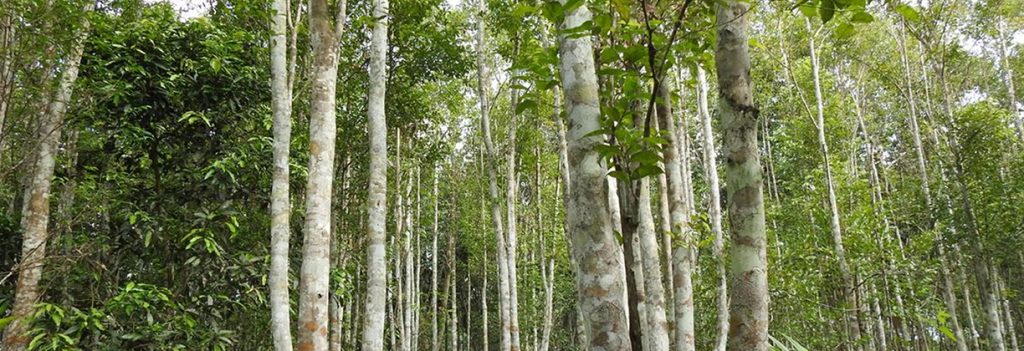
Aquilaria malaccensis to the brink of extinction in its natural habitat.10
This ecological crisis prompted a critical international intervention. In 1995, the Convention on International Trade in Endangered Species of Wild Fauna and Flora (CITES) listed Aquilaria malaccensis under its Appendix II.2 This designation identifies the species as not necessarily threatened with immediate extinction but one that may become so unless trade in its specimens is subject to strict regulation to avoid utilization incompatible with its survival. This listing fundamentally changed the industry, making the trade of wild-sourced agarwood illegal without proper permits and creating a powerful incentive to shift towards more sustainable sources. In line with these international regulations, the Government of Bangladesh has officially prohibited the export of agarwood from wild populations and has maintained a moratorium on the felling of trees in its natural forests.14
The Rise of Plantations
The depletion of wild resources and the subsequent CITES regulations catalyzed a fundamental transformation of the Bangladeshi agarwood industry: a wholesale shift from wild harvesting to organized cultivation. This transition has been driven by both government initiatives and private enterprise. The Bangladesh Forest Research Institute (BFRI) and the Bangladesh Forest Department (BFD) have played a crucial role, establishing hundreds of hectares of experimental agarwood plantations in Sylhet and the Chittagong Hill Tracts, often on denuded or encroached forest lands, to study and promote cultivation.15
Alongside these public efforts, a vibrant private sector has emerged. The industry is now dominated by an estimated 300 small and medium-sized enterprises, which have established privately owned plantations on homesteads, fallow lands, and tea estates.12 One of the largest single initiatives was undertaken by the BRAC Tea Estate, which planted over 83,000 agar seedlings on 17 acres of land in 2007.1 This shift has created a new rural economy, with estimates suggesting that between 25,000 and 45,000 people are now directly involved in the cultivation, processing, and trade of agarwood, primarily in the villages of Moulvibazar.9
The entire modern Bangladeshi agarwood industry is, therefore, a direct economic and ecological consequence of resource depletion. Its survival and future prosperity are no longer tied to the fortunes of wild forests but are instead inextricably linked to the success of artificial cultivation. The central challenge for the industry has shifted from finding the resource to creating it. This represents a fundamental change in the nature of the industry, moving it from a practice of extraction to one of agriculture and, as the next section will explore, biotechnology. The success of ongoing research into improved cultivation and resin-induction techniques is not merely an academic pursuit; it is a critical determinant of the long-term viability of this ancient trade in a modern world.
The Wounded Tree: The Art and Science of Resin Induction
The creation of agarwood is a remarkable botanical phenomenon, a transformation born from injury. The fragrant, dark resin that makes the wood so valuable is not a natural component of a healthy Aquilaria tree. Instead, it is a product of the tree’s immune response to stress—a process that turns worthless wood into “liquid gold.” The methods used to trigger this transformation lie at the very heart of the agarwood industry, representing a fascinating intersection of centuries-old artisanal knowledge and modern scientific innovation.
The Biological Imperative: Tylosis
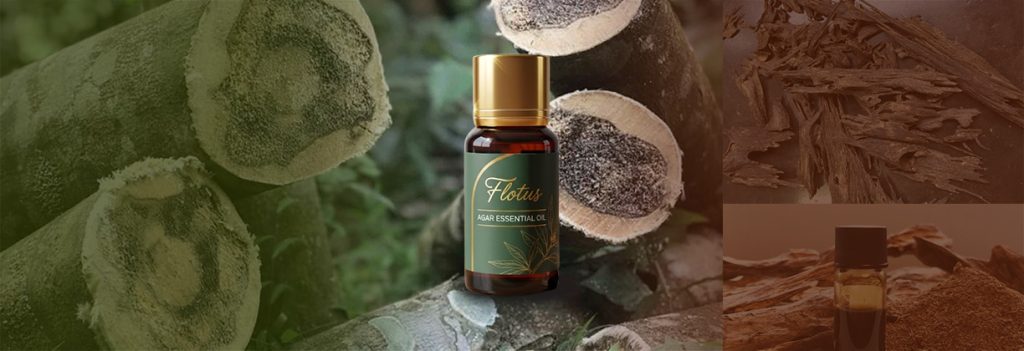
From a biological perspective, agarwood is a pathological product. When an Aquilaria tree is wounded, whether by a lightning strike, animal grazing, insect borers, or microbial invasion, it initiates a complex defense mechanism known as tylosis.1 As part of this response, the tree produces a dark, viscous, and highly aromatic oleoresin to seal the wound, inhibit the spread of infection, and suppress the invading pathogens. Over a period of several years, this resin slowly saturates the heartwood surrounding the injury, making it dense, dark, and fragrant. A healthy, unwounded tree contains no such resin and is commercially worthless for fragrance purposes.20 The entire practice of agarwood cultivation, therefore, is centered on the art and science of intentionally and effectively wounding the tree to stimulate this lucrative defensive response.
Traditional Induction: The Way of the Nail
For generations, the agarwood artisans of Sylhet have relied on a traditional, physically intensive method of induction. This indigenous technique, passed down through families, involves meticulously studding the trunk and major branches of a mature Aquilaria tree with thousands of iron nails.21 The process typically begins when a tree is between eight and ten years old. The nails, often several inches long, are hammered into the tree in specific patterns, creating a multitude of small wounds that penetrate the heartwood.
This method is both a craft and a closely guarded secret. The precise placement, depth, and density of the nails are believed to be crucial for stimulating a widespread and high-quality resin response. After the “ironing” is complete, the tree is left for another three to four years, during which the slow process of resin deposition occurs around each wound point.12 While time-tested, this method is laborious, and the resulting quality and quantity of agarwood can be inconsistent, depending heavily on the individual tree’s response and the skill of the practitioner.
Modern Inoculation: A Scientific Approach
Recognizing the limitations of traditional methods, the global agarwood industry is increasingly turning to more scientific and systematic approaches to resin induction. These modern techniques aim to make the process more reliable, efficient, and capable of producing higher-quality resin in a shorter timeframe. Research in Bangladesh and abroad is focused on several key methods:
- Systematic Mechanical Wounding: This involves more controlled forms of injury than random nailing. Techniques such as drilling holes in precise spiral patterns along the trunk or making specific cuts with saws are used to create uniform wounds that can then be treated with inducers.7
- Fungal Inoculation: This biotechnological approach is based on the understanding that fungal infection is a primary natural trigger for resin production. It involves introducing specific strains of fungi, such as Fusarium solani or Melanotusflavolivens, directly into the wounds.23 The theory is that this targeted infection will provoke a stronger and more consistent immune response from the tree, leading to a higher yield and quality of agarwood.
- Chemical Inducers: This is currently one of the most widely used methods in commercial plantations globally due to its perceived consistency. It involves injecting chemical agents, such as salicylic acid or jasmonic acid, into the tree to stimulate the resin-producing defense pathways.7
In Bangladesh, this transition from traditional craft to applied science is being actively pursued. The Bangladesh Forest Research Institute (BFRI) is implementing a major government-funded project titled “Development of an Improved Agarwood Inoculation Technique”.27 The explicit goal of this project is to invent a proprietary artificial inoculum and an effective application technique tailored for Bangladeshi conditions. The aim is to enable local planters to produce high-quality agar resin more reliably and within a shorter period, a development that could revolutionize the industry’s productivity and profitability.
This evolution from “nailing” to “inoculation” represents a critical paradigm shift. It marks the transformation of agarwood production from a purely artisanal practice based on inherited, empirical knowledge to a science-based agribusiness. The success of this transition will be a determining factor in whether the Bangladeshi industry can scale its production, improve its quality control, and compete effectively on the global stage. The research being conducted at institutions like BFRI is not just an academic exercise; it is a vital component in bridging the gap between the industry’s immense economic potential and its current, often inefficient, production reality.
Alchemy of Aroma: The Traditional Distillation of Bangladeshi Oud
The transformation of dark, resinous wood chips into the potent, complex essential oil known as oud or agar ator is a process of artisanal alchemy. In Bangladesh, this transformation is achieved almost exclusively through hydro-distillation, a traditional method that relies on the patient application of water, fire, and time. The process is less an industrial procedure and more a craft, where the final quality of the “liquid gold” depends heavily on the generational knowledge and sensory skill of the master distiller.
The Artisanal Process: Hydro-Distillation
The traditional hydro-distillation method practiced in the villages of Sylhet is a multi-stage process that has remained largely unchanged for centuries.24 It is a slow, deliberate, and fragrant journey from solid wood to liquid essence.
- Selection and Preparation: The process begins long before the still is fired. After a cultivated and induced Aquilaria tree is harvested, the wood is split open. Workers then painstakingly use hand tools to carve away the pale, worthless wood, isolating the dark, resin-saturated heartwood. This precious wood is then chopped into small, thin chips to maximize the surface area for extraction.21
- Soaking and Fermentation: This is a crucial and often overlooked step that is fundamental to developing the oil’s characteristic aromatic profile. The wood chips are submerged in water inside large steel drums and left to soak for an extended period, which can range from ten to as long as forty days.21 During this time, a slow fermentation process begins. This enzymatic and microbial action starts to break down the wood’s cellular structure, releasing the aromatic compounds from the resin and initiating the development of the deep, complex, and often animalic notes for which high-quality oud is prized.
- Distillation: After fermentation, the sodden wood chips and their soaking water are transferred into large, traditional copper stills, known locally as degs. These stills are sealed and then heated slowly over a hand-fed fire, typically fueled by wood or, more recently, gas burners.21 The process is a true hydro-distillation, as the wood is boiled directly in the water. The fire must be managed with immense skill for an extended period—often nine to ten continuous days—to maintain a slow, steady simmer. Too much heat can burn the oil and ruin the fragrance, while too little will fail to release the precious aromatic molecules.
- Condensation and Separation: As the water simmers, it creates steam that passes through the wood chips, carrying the volatile essential oil molecules with it. This aromatic steam is channeled through a copper or bamboo pipe (chonga) into a separate receiving vessel (bhapka), which is submerged in a tank of cool water to act as a condenser.5 As the steam cools and condenses back into water (now known as hydrosol or agarwood water), the essential oil, which is not water-soluble, separates and floats to the surface. This precious layer of oil is then meticulously collected by hand, often drip by drip, and carefully separated from the water.21 The skill of the master distiller is paramount throughout this stage, as their experience dictates the precise control of the fire and the judgment of when the distillation is complete.
The Science of the Scent
The exceptional quality and high value of Bangladeshi agarwood oil are not merely matters of subjective opinion; they are rooted in its chemical composition. Modern analytical techniques, specifically Gas Chromatography-Mass Spectrometry (GC-MS), have been used to analyze the chemical profile of export-grade agarwood oil from Moulvibazar, providing a scientific basis for its esteemed reputation.31
These analyses reveal that the oil is overwhelmingly composed of a class of organic compounds known as sesquiterpenes. These complex molecules are responsible for the characteristic deep, woody, resinous, and long-lasting aroma of oud. Studies of Bangladeshi oil have shown sesquiterpene concentrations to be exceptionally high, often ranging from 93% to over 95% of the total volume.31 This high concentration of the key aromatic compounds scientifically validates the quality of the oil produced through traditional methods and explains its desirability in the global high-end perfumery market.
| Compound Category | Key Compounds Identified in Bangladeshi Agarwood Oil | Percentage Range (%) | |
| Sesquiterpenes | 5-Azulenemethanol, Aromandendrene, Ledene oxide-II, Isoaromadendrene epoxide | 93.90 – 95.37 | |
| Alkanes | Various | ~2 | |
| Alcohols | Various | ~1 | |
| Fatty Acids | Various | >2 | |
| Source: Compiled from GC-MS analysis data of exportable agar oils from Moulvibazar, Bangladesh.31 |
Modern Alternatives
While hydro-distillation is the dominant practice in Bangladesh, other extraction methods are used elsewhere in the world. Steam distillation, where steam is passed through the plant material rather than boiling it directly in water, and advanced methods like supercritical CO2 extraction, which uses pressurized carbon dioxide as a solvent, are also known.24 However, for the small-scale, artisanal producers of Sylhet, hydro-distillation remains the most accessible, cheapest, and technologically simplest method.24 While some larger, more modern facilities are beginning to emerge in Bangladesh, sometimes with the support of international consultants, the soul of the country’s oud production remains firmly rooted in the traditional, time-honored alchemy of the copper
deg.32
The Modern Industry: From Village Craft to Global Commodity
The contemporary agarwood industry in Bangladesh represents a fascinating economic case study, where a 400-year-old artisanal craft is transitioning into a modern, export-oriented agribusiness.12 Centered in the villages of Moulvibazar, this sector has a significant socio-economic impact, supporting tens of thousands of livelihoods. Despite its deep roots and informal nature, financial analysis reveals an enterprise of remarkable profitability, though one whose full potential is constrained by structural challenges related to its long production cycle and lack of access to formal capital.
Industry Structure and Scale
The heart of the Bangladeshi agarwood industry beats in the Barlekha Upazila of Moulvibazar district, particularly in the union of Sujanagar.9 The sector is composed of approximately 300 enterprises, a mix of registered and unregistered family-run businesses that handle everything from cultivation to distillation.15 These operations are highly labor-intensive and provide a crucial source of rural employment, engaging an estimated 25,000 to 45,000 people.9 Notably, the industry provides significant opportunities for female workers, who constitute about 25% of the workforce, particularly in the meticulous tasks of wood processing and preparation.19
The industry is entirely export-oriented, with virtually all of its output destined for international markets.19 Production is focused on three primary products:
- Agar Oil (Attar): The most valuable product, the essential oil is the primary export.
- Agarwood Chips: High-quality, resin-infused wood pieces sold for burning as incense (bakhoor).
- Agar Dust/Powder: A by-product of processing, this is used as a lower-cost raw material for making incense sticks.12
Economic Viability and Profitability
Despite its cottage-industry scale, agarwood production in Bangladesh is an exceptionally lucrative enterprise. Detailed economic studies conducted in the Barlekha region provide a clear picture of the costs, returns, and overall financial viability of both cultivation and processing.
Cultivation Economics: An analysis of a one-acre agarwood plantation over a typical 12-year cultivation and induction cycle reveals substantial profitability. The total production cost per acre is estimated at approximately BDT 1.45 million (about $12,300 USD). A significant portion of this cost, over 50%, is for the iron nails used in the traditional induction process.8 Against this investment, the gross return from selling the mature, resin-induced trees is estimated at BDT 3.34 million (about $28,300 USD), yielding a net return of around BDT 1.89 million (about $16,000 USD) per acre.34
Investment analysis confirms the strong financial case. The enterprise shows a positive Net Present Value (NPV) of BDT 552,326, a discounted Benefit-Cost Ratio (BCR) of 2.07, and a remarkable Internal Rate of Return (IRR) of 23.7%. The BCR of 2.07 indicates that for every BDT 100 invested, a farmer can expect a net benefit of BDT 207 over the project’s life, making it a highly attractive long-term investment.8
| Category | Cost/Return Item | Value per Acre (BDT) | % of Total Cost | |
| Variable Costs | Total Variable Costs | 1,330,571 | 91.73% | |
| Iron Nails for Induction | 767,746 | 52.93% | ||
| Interest on Operating Capital | 498,964 | 34.40% | ||
| Other Materials (Seedlings, Fertilizer, etc.) | 30,245 | 2.08% | ||
| Labor Costs | 33,616 | 2.32% | ||
| Fixed Costs | Total Fixed Costs (Land Use) | 120,000 | 8.27% | |
| Total Cost | 1,450,571 | 100% | ||
| Gross Return | Sale of Mature Trees | 3,343,500 | – | |
| Net Return | 1,892,929 | – | ||
| Financial Metrics | Net Present Value (NPV) @ 10% | 552,327 | – | |
| Discounted Benefit-Cost Ratio (BCR) | 2.07 | – | ||
| Internal Rate of Return (IRR) | 23.7% | – | ||
| Table 1: Financial Viability of a 1-Acre Agarwood Plantation in Bangladesh (12-Year Cycle). Source: Compiled from data in.8 |
Processing Profitability: The distillation process is also highly profitable. A typical small enterprise processing between 600 kg and 4 metric tons of agarwood can expect a production cost of approximately BDT 0.5 million (about $4,200 USD) and generate returns of BDT 1.3 million (about $11,000 USD), resulting in a net return of BDT 0.8 million (about $6,800 USD) per cycle.15
The financial model of the Bangladeshi agarwood industry is defined by high upfront investment and a very long gestation period, followed by exceptionally high returns. This structure presents a unique economic challenge. The 12-to-15-year wait for a return on investment makes the sector highly sensitive to cash flow issues and heavily dependent on access to long-term, patient capital. However, the industry’s largely informal nature and its lack of official recognition in national financial policies mean that such capital is scarce. Farmers and small entrepreneurs report a significant lack of access to formal credit at reasonable interest rates, a major barrier to entry and expansion.19 This creates a paradox: an industry with an IRR that would be the envy of many formal sectors is struggling to scale because its financial structure is fundamentally misaligned with the short-term lending cycles of conventional banking. This traps many producers in a small-scale, under-capitalized state, unable to invest in the land and technology needed to grow.
The Global Scent Trail: Markets, Trade, and Regulations
The journey of Bangladeshi agar ator from the rustic distilleries of Sylhet to the luxury perfume counters of the world is a complex one, shaped by deep-seated cultural demand, entrenched trade practices, and a web of international and domestic regulations. While the potential market is vast and lucrative, Bangladeshi producers face significant hurdles in accessing it, with much of the trade flowing through informal channels that limit both profitability and national economic benefit.
Primary Export Markets
The overwhelming majority of Bangladeshi agarwood products are destined for the Middle East. This region represents the cultural and commercial heart of the global oud market, where its use is deeply embedded in daily life. Countries such as the United Arab Emirates (with Dubai serving as a major global trading hub), Saudi Arabia, Qatar, and Kuwait are the primary consumers.19 The demand is driven by the cultural and religious importance of using oud as a personal fragrance and burning agarwood chips as
bakhoor to scent homes, clothing, and public spaces, particularly as a gesture of hospitality.3
While North-East Asia—particularly Japan and Taiwan—is also a major global market for high-quality agarwood for its use in incense ceremonies (Kōdō), it is a less dominant destination for Bangladeshi exports compared to the Middle East.18 The total annual export market for Bangladeshi agar oil and wood is estimated to be around Tk60 crore (approximately $5.1 million USD), though this figure likely underestimates the true volume due to the prevalence of informal trade.19
The Challenge of Informal Trade
A defining characteristic of the Bangladeshi agarwood trade is its historical and continued reliance on informal export channels. For centuries, the primary method of getting the product to market has been the so-called “luggage trade”.12 In this system, entrepreneurs, their family members, or trusted agents physically carry quantities of agarwood oil and chips in their personal luggage on flights to hubs like Dubai or Mumbai, where they sell directly to wholesalers or retailers for cash.12
This deeply entrenched informal system persists for several compelling reasons. Firstly, the formal export process is perceived as prohibitively complex and expensive for the small quantities that individual producers often handle. For example, the administrative cost and bank fees for opening a Letter of Credit—a standard instrument in formal international trade—can be the same for a one-liter shipment as for a ten-liter one, making it economically unviable for small-scale exporters.37 Secondly, high import duties in many destination countries create a strong financial incentive for traders to bypass official customs channels.22 The consequences of this informality are severe: the government of Bangladesh loses out on significant potential tax revenue and export earnings, and the lack of official trade data makes it impossible for policymakers to accurately assess the industry’s true economic contribution and formulate effective support policies.12
Formal Export Procedures and Hurdles
For producers who do wish to engage in formal trade, the process is governed by a series of domestic and international regulations. Domestically, an exporter must first obtain an Export Registration Certificate (ERC) from the Chief Controller of Imports and Exports.38 Each shipment must be accompanied by a set of documents, including a commercial invoice, a packing list, a Certificate of Origin, and a crucial EXP form certified by an authorized bank to ensure the repatriation of export proceeds.40
Internationally, the most significant hurdle is CITES. As Aquilaria malaccensis is an Appendix II-listed species, any formal international trade requires a CITES export permit from the Bangladeshi authorities and an import permit in the destination country.41 This process involves proving that the product is sourced from legal, cultivated plantations and not from the wild, a documentation-heavy procedure that can be daunting for small, rural entrepreneurs.
Compounding these procedural challenges are financial disincentives. The Bangladeshi government imposes a 15% duty on agarwood exports, and in recent years, the cash incentive provided to exporters was drastically reduced from 20% to just 8%.19 This combination of high taxes and low incentives further erodes the profitability of formal trade, pushing more producers towards the grey market.
This trade structure creates a significant value-capture crisis for Bangladeshi producers. Positioned at the very beginning of a long and lucrative global value chain, they primarily act as suppliers of a raw material. The informal nature of the trade means they often sell to middlemen in entrepôt markets like Dubai at prices far below the final retail value. The global market for agarwood and its derivatives is valued in the billions of dollars, yet Bangladesh’s officially recorded export earnings from the sector are in the mere tens of millions.6 The vast majority of the value is added and captured downstream by international traders, perfume houses, and retailers. The policy and regulatory barriers in Bangladesh, combined with high tariffs abroad, reinforce this inequitable structure. To shift this dynamic and allow more of the wealth generated by this “liquid gold” to remain in the communities that produce it, a fundamental move towards formalizing trade and enabling direct market access is essential.
An Unsettled Future: Challenges and Opportunities for Bangladeshi Agarwood
The Bangladeshi agarwood industry stands at a critical juncture. It is an industry with a 400-year-old heritage, immense cultural significance, and proven high profitability at the farm level. Yet, its growth is stunted, trapped in a cycle of informality and technological stagnation. Its future trajectory will depend on a strategic pivot from an unsupported, fragmented craft to a formalized, technology-driven, high-value agro-industry. This transformation requires a concerted and coordinated effort from the government, research institutions, and the entrepreneurs themselves to overcome a series of deeply rooted challenges and seize clear opportunities for growth.
Consolidated Challenges
The obstacles hindering the agarwood industry are systemic and interconnected. They can be consolidated into four main areas:

- Policy Vacuum: This is arguably the most significant barrier. Despite being declared an “industrial sector” in 2014, agarwood production remains largely invisible in key national policies.15 It is not meaningfully included in industrial, export, or SME support frameworks. This official neglect denies entrepreneurs access to crucial benefits that other sectors enjoy, such as concessional loan facilities, industrial rates for utilities like gas and electricity, and robust export incentives.11 This lack of a coherent policy framework is the root cause of many of the industry’s other problems.
- Financial Constraints: The long, 12- to 15-year investment cycle of agarwood cultivation makes it a capital-intensive enterprise. However, producers have extremely limited access to the kind of affordable, long-term financing that is necessary to sustain and expand their operations.15 Without formal recognition and policy support, commercial banks are reluctant to provide loans, forcing many to rely on personal funds or high-interest informal credit, which stifles investment in larger plantations and modern equipment.19
- Technological Gap: The industry remains heavily reliant on traditional, often inefficient, methods for both resin induction (nailing) and oil distillation (wood-fired stills). While these methods are part of the industry’s heritage, they result in inconsistent yields, variable quality, and a limited product range. Bangladesh currently produces only three basic products (oil, chips, dust), while international competitors offer a more diverse portfolio.12 There is a pressing need for widespread training and adoption of modern techniques to improve every stage of the value chain.
- Market Access and Trade Barriers: The path to the global market is fraught with obstacles. Domestically, high export duties (15%) and low incentives (8%) make formal exporting less attractive.19 Internationally, producers face high import tariffs in key markets and the complex, often confusing, bureaucratic requirements of CITES compliance.36 This combination of factors pushes trade into informal channels, limiting growth, depressing prices for producers, and depriving the national exchequer of revenue.
Pathways to Growth and Government Initiatives
Despite these challenges, there are clear opportunities and emerging initiatives that offer a pathway to a more prosperous future for the industry.
- Formal Recognition and Policy Advocacy: The 2014 declaration of agar as an “industrial sector” was a crucial first step, providing a legal basis for further action.15 Building on this, the SME Foundation has emerged as a key advocate for the industry. It has successfully lobbied to have agar prioritized as a focus industry, provided training on business management and export procedures, disbursed around Tk2 crore in low-interest loans to 41 entrepreneurs, and is actively engaged in policy discussions with the National Board of Revenue to address the issue of high export duties.19
- Technological Upgrading through Research: The most significant opportunity for a quantum leap in the industry’s potential lies in technological innovation. The government-funded project by the Bangladesh Forest Research Institute (BFRI) to develop an improved, artificial inoculation technique is of paramount importance.27 A successful outcome of this research could provide Bangladeshi farmers with a proprietary, scientifically validated method to produce higher quality resin more quickly and consistently, fundamentally upgrading the industry’s production capacity and global competitiveness.
- Strategic Recommendations: Industry stakeholders and analysts have put forward a clear set of recommendations for unlocking the sector’s potential. These include officially declaring agarwood a national priority sector, which would unlock a suite of industrial benefits. A key recommendation is for the government to engage in trade diplomacy to negotiate for Duty-Free and Quota-Free (DFQF) market access in key importing countries, which would neutralize the tariff disadvantage and incentivize formal trade.15 Furthermore, there is a strong call for the establishment of government-supported institutional arrangements for training entrepreneurs in modern cultivation, distillation, and product diversification techniques.18
The future of the Bangladeshi agarwood industry depends on a strategic shift. The current state is one of high potential profitability at the micro-level, but stagnation and underdevelopment at the macro-level. The isolated efforts of the SME Foundation and BFRI are positive and necessary, but they are insufficient to trigger a systemic transformation on their own. What is required is a comprehensive national strategy that integrates these efforts. Such a strategy would create a virtuous cycle: formal policy recognition would unlock access to credit; credit would fund the adoption of new technologies developed by BFRI; better technology would lead to higher yields and quality; and improved products, combined with favorable trade agreements, would make formal exporting more profitable, justifying further investment and growth. This is the pathway that can transform a collection of disparate cottage industries into a cohesive, globally competitive national sector.
The Essence of Culture: Attar in the Bangladeshi Social Fabric
While the economic analysis and industrial challenges of the agarwood trade are compelling, to fully understand its story is to appreciate its deep resonance within Bangladeshi culture itself. Agar ator is not merely an export commodity; it is an integral part of the nation’s sensory landscape, woven into the fabric of religious observance, social customs, and personal identity. This profound cultural embedding provides the industry with a resilient domestic foundation and a powerful, authentic narrative for the global market.
Attar in Religious and Daily Life
In Bangladesh, a predominantly Muslim country, the use of attar is deeply connected to Islamic traditions. The fragrance is most powerfully associated with the festival of Eid. On Eid morning, it is a customary practice for men and boys, dressed in new clothes, to apply attar to their pulse points before heading to the Eidgah (prayer ground). The collective scent of attar in the air becomes a tangible, aromatic symbol of the day’s sanctity and celebration.42 This practice is a continuation of the tradition established by the Prophet Muhammad (P.B.U.H), whose own use of oud lends the fragrance a special spiritual significance.3
The role of fragrance extends to other profound life-cycle rituals. In the customs surrounding death and burial, the body of the deceased is washed, perfumed with scents like attar, and then wrapped in a simple white shroud before prayers and burial.44 This use in both the most joyous of festivals and the most solemn of occasions highlights the role of scent in marking moments of sacred importance in Bangladeshi life.
A Symbol of Hospitality and Status
In line with broader South Asian and Middle Eastern customs, fragrance plays a key role in the rituals of hospitality. Burning agarwood chips (bakhoor) to create a fragrant smoke is a traditional way to welcome guests into one’s home, signifying respect and creating a pleasant atmosphere.3 While less common than in the Arabian Peninsula, this practice is part of the shared cultural heritage of oud.
On a personal level, the use of attar is a form of self-expression and a subtle marker of sophistication and status. In a culture that values modesty in dress, a distinctive and high-quality fragrance can be a powerful way to make a personal statement.45 The choice of a particular
attar—whether a deep, woody oud, a floral rose, or an earthy vetiver—reflects personal taste and refinement.47
Attar in Modern Bangladesh
In contemporary Bangladesh, traditional attar coexists with the globalized world of modern, alcohol-based perfumes. For some time, Western brands gained ascendancy, particularly among younger, urban generations.48 However, there is evidence of a cultural revival, a “modern makeover” for
attar. A new generation of consumers and local brands are rediscovering these traditional oils, valuing them for their natural ingredients, alcohol-free composition (important for religious observance), and their deep cultural authenticity.48 This resurgence is part of a broader global trend towards natural, sustainable, and artisanal products.
The role of attar as a significant gift also endures. It is a common component of gift sets for men, often paired with a traditional panjabi and a wallet.49 In Bengali Hindu wedding traditions, perfume is included as part of the
Phul-Sajjar-Tatwa, a collection of auspicious items and cosmetics that the bride’s family presents to the groom’s family, signifying its place in the ceremonial exchange of goodwill.50
This deep cultural embedding of attar within Bangladeshi society provides more than just a stable domestic market; it offers the industry its most powerful branding tool. The global luxury consumer is increasingly drawn to products with a genuine story, a connection to place, and a heritage of artisanal craftsmanship.45 Bangladeshi agarwood oil is not an anonymous commodity produced in a faceless factory. It is the product of a 400-year-old craft, nurtured in the specific ecology of the Sylhet hills, and imbued with centuries of spiritual and cultural meaning. This authenticity is its unique value proposition on the world stage. Marketing that effectively communicates this rich narrative—the story of the wounded tree, the alchemy of the copper still, and the scent of Eid morning—can elevate Bangladeshi
agar ator from a mere raw material to a celebrated symbol of a nation’s cultural essence.
